
Spondylodiscitis is an inflammation of an intervertebral disc and the adjacent vertebrae, usually caused by bacteria. It typically leads to severe, activity-related back pain. If nerve roots are affected, leg pain and neurological deficits may also occur. Treatment requires targeted antibiotic therapy. In advanced cases, surgery may be necessary. During surgery, infected tissue is removed, and the affected section of the spine is stabilized through fusion. This fusion is referred to as spondylodesis.
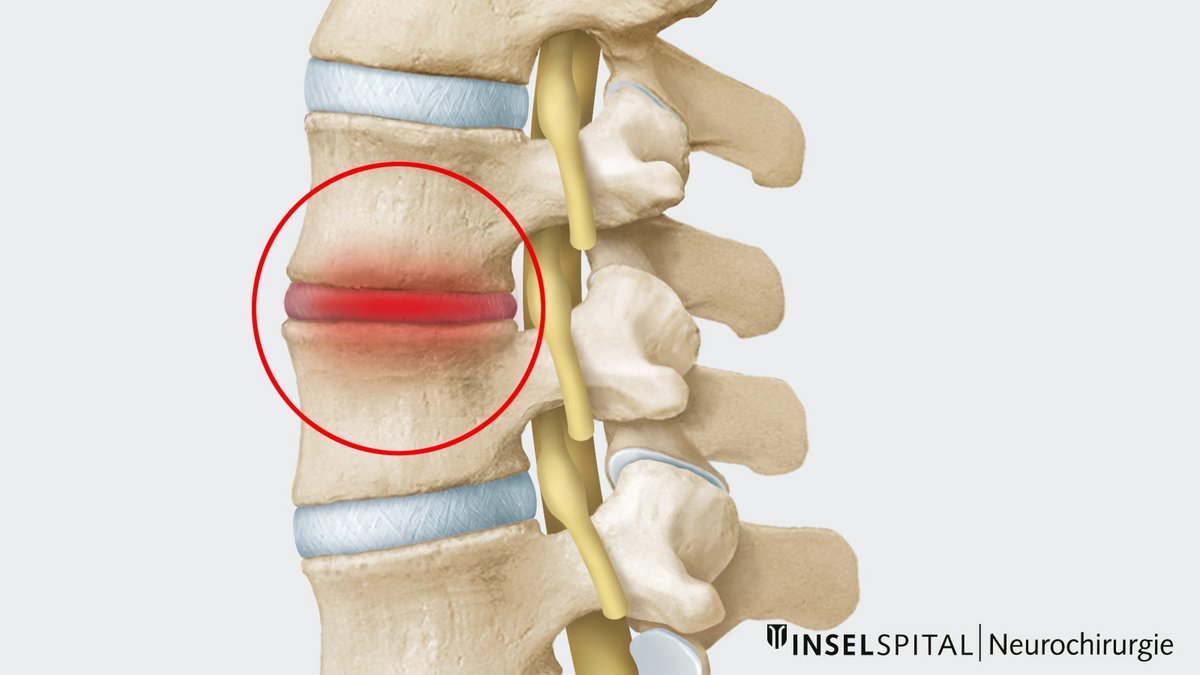
How common is spondylodiscitis?
Spondylodiscitis has been diagnosed more frequently in recent years. This is due to the growing number of older adults as well as the increase in risk factors such as diabetes mellitus, immunosuppression, or previous spinal surgery.
What is the cause of spondylodiscitis?
Bacteria are usually responsible for the infectious infestation of the intervertebral disc and adjacent vertebrae. These bacteria can spread via the bloodstream from distant entry points and infection sites (e.g. mouth and throat, skin, lungs) to the heavily perfused spinal column, where they can become established.
Furthermore, bacterial spondylodiscitis can also be caused by previous spinal surgery, mainly if foreign material (screws and implants) was used. In these cases, skin bacteria most frequently settle in the wound or even on the implants. Chronically ill patients, immunosuppressed or immunocompromised patients have an increased risk of developing spondylodiscitis.
What are the symptoms of spondylodiscitis?
In most cases, load- and movement-dependent pain first occurs in the area of the affected spinal segment. The pain can be very pronounced, and patients are increasingly restricted in their mobility as a result. If an accumulation of pus in the spinal canal presses on the nerve roots or the spinal cord, there are also corresponding neurological deficits:
- radiating pain in the arms (in the case of the cervical spine)
- radiating pain in the legs (in the case of the lumbar spine)
- paralysis
- sensory disturbances in the area of arms and/or legs
In addition, there is often a general feeling of malaise and illness with fever and chills.
How is spondylodiscitis diagnosed?
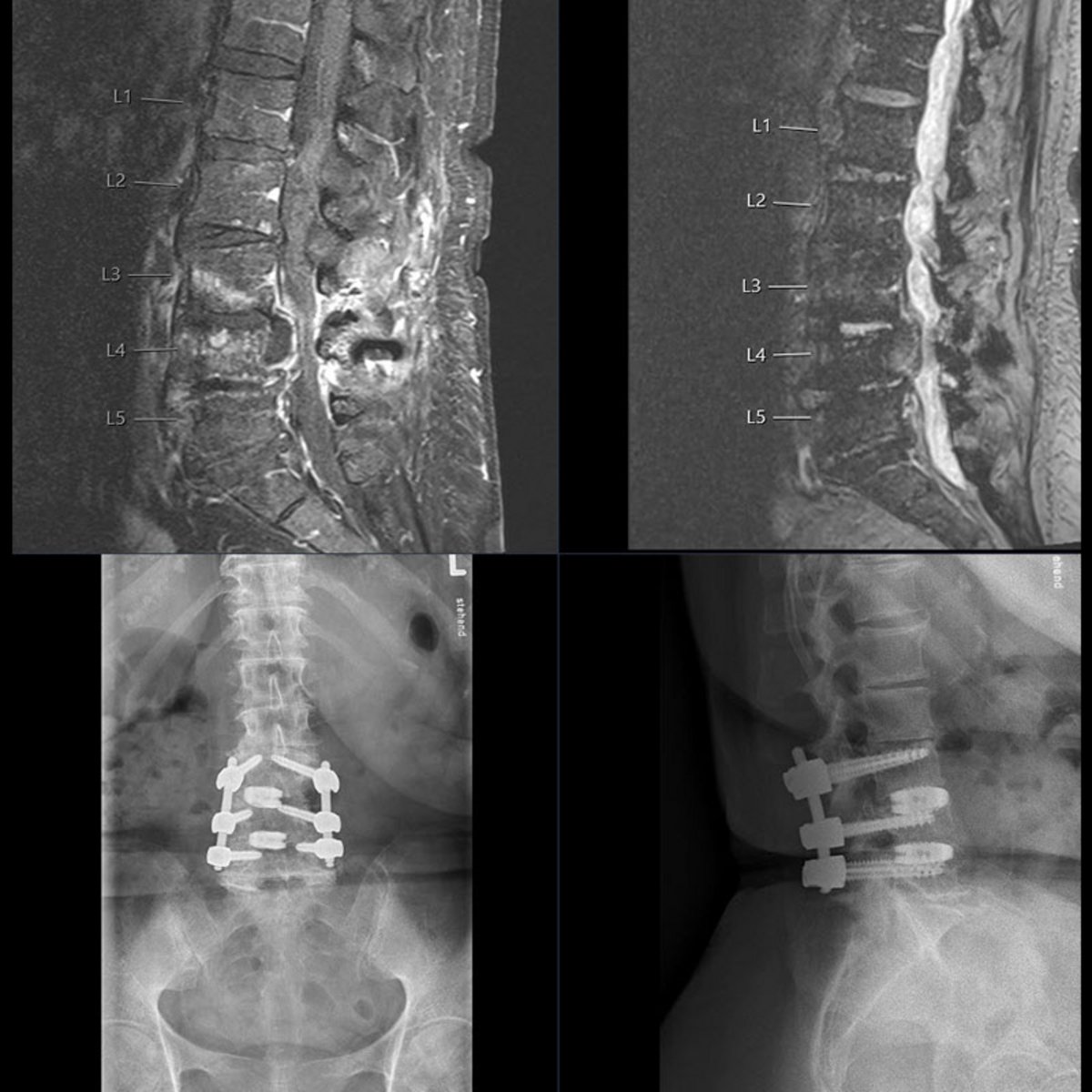
In addition to a detailed interview with the doctor regarding symptoms and medical history, a thorough physical examination is performed. This examination may already raise suspicion of spondylodiscitis.
Inflammatory markers in the blood can provide further evidence of an infection. A blood culture is performed to determine whether bacteria are present in the blood. If the causative bacteria are identified, antibiotic therapy can be specifically tailored to them.
The diagnosis can usually be confirmed with magnetic resonance imaging (MRI). To more accurately assess the extent to which the bones are affected, a computed tomography (CT) scan may also be performed.
It is also important to determine the cause of spondylodiscitis, provided that no previous spinal surgery is a possible trigger. This involves searching for a site through which bacteria might have entered the body. For example, the skin, throat, and teeth are thoroughly examined. An ultrasound examination of the heart (echocardiography) can reveal whether the heart valves are also affected by the bacterial infection.
If no pathogens are detected in the blood cultures, tissue samples can be taken from the intervertebral disc or the vertebral bodies. This procedure is performed under CT guidance and is referred to as a CT-guided biopsy. The samples are then examined to identify the causative pathogen.
How is spondylodiscitis treated?
In cases of bacterial spondylodiscitis, targeted antibiotic therapy plays the most important role at the start of treatment. It typically lasts 6–12 weeks and is coordinated with specialists in infectious diseases (infectiology). Regular monitoring of inflammatory markers in the blood helps assess the effectiveness of the treatment.
In advanced cases involving large abscesses and the spread of infection into the spinal canal, surgery is usually necessary. During the procedure, the abscesses are removed and compressed nerves are relieved. The infected tissue that is removed is then examined in the laboratory to identify the causative pathogens. In appropriate cases, surgery can significantly improve the prognosis.
In very advanced cases or when pain is extremely severe, it may be necessary to remove the infected intervertebral disc and stabilize the affected vertebrae with a screw-rod system. For example, a titanium implant combined with antibiotic-impregnated bone substitute material is inserted in place of the removed intervertebral disc. In patients who have already undergone surgery, infected implants generally must be removed and, if necessary, replaced.
For severely ill patients, we determine the optimal timing for surgery on a case-by-case basis in collaboration with the relevant medical specialties to optimize the treatment outcome.
Why you should seek treatment at Inselspital
We tailor the treatment, as well as the type and duration of antibiotic therapy, specifically to you and the course of your illness. Our infectious disease specialists are involved in the diagnosis and treatment from an early stage. This ensures that the relevant medical disciplines work closely together from the very beginning to provide you with comprehensive care. In addition, Prof. Schär is involved in developing European treatment guidelines for spondylodiscitis.
-
Kramer A, Thavarajasingam SG, Neuhoff J, Ponniah HS, Ramsay DSC, Demetriades AK, Davies BM, Shiban E, Ringel F. Epidemiological trends of pyogenic spondylodiscitis in Germany: an EANS Spine Section Study. Sci Rep. 2023 Nov 18;13(1):20225. doi: 10.1038/s41598-023-47341-z.
-
Kramer A, Thavarajasingam SG, Neuhoff J, et al. Diagnosis and management of de novo non-specific spinal infections: European Association of Neurosurgical Societies (EANS) Spine Section Delphi consensus recommendations. Brain Spine. 2024 Dec 31;5:104178. doi: 10.1016/j.bas.2024.104178.
-
Kramer A, Thavarajasingam SG, Neuhoff J, et al. Management of severe pyogenic spinal infections: the 2SICK study by the EANS spine section. Spine J. 2025 May;25(5):876-885. doi: 10.1016/j.spinee.2024.12.018. Epub 2024 Dec 12.
-
Neuhoff J, Kramer A, Thavarajasingam SG, Sutherland RK, McCaughan H, Joerger AK, Wostrack M, Lyell B, Berkulian O, Ponniah HS, Ramsay DSC, Meyer B, Kandziora F, Shiban E, Davies B, Demetriades AK, Ringel F. Comparing Conservative and Early Surgical Treatments for Pyogenic Spondylodiskitis: An International Propensity Score-Matched Retrospective Outcome Analysis. Neurosurgery. 2025 May 1;96(5):1008-1022. doi: 10.1227/neu.0000000000003223. Epub 2024 Oct 17.