
To mark World Spine Day on October 16, we are highlighting a profession that combines clinical expertise with compassionate care: Advanced Practice Nurses (APNs) in neurosurgery support patients after spinal surgery, coordinate their treatment, and ensure continuity of care. Helene Schenk explains just how varied her responsibilities are as an Advanced Practice Nurse.
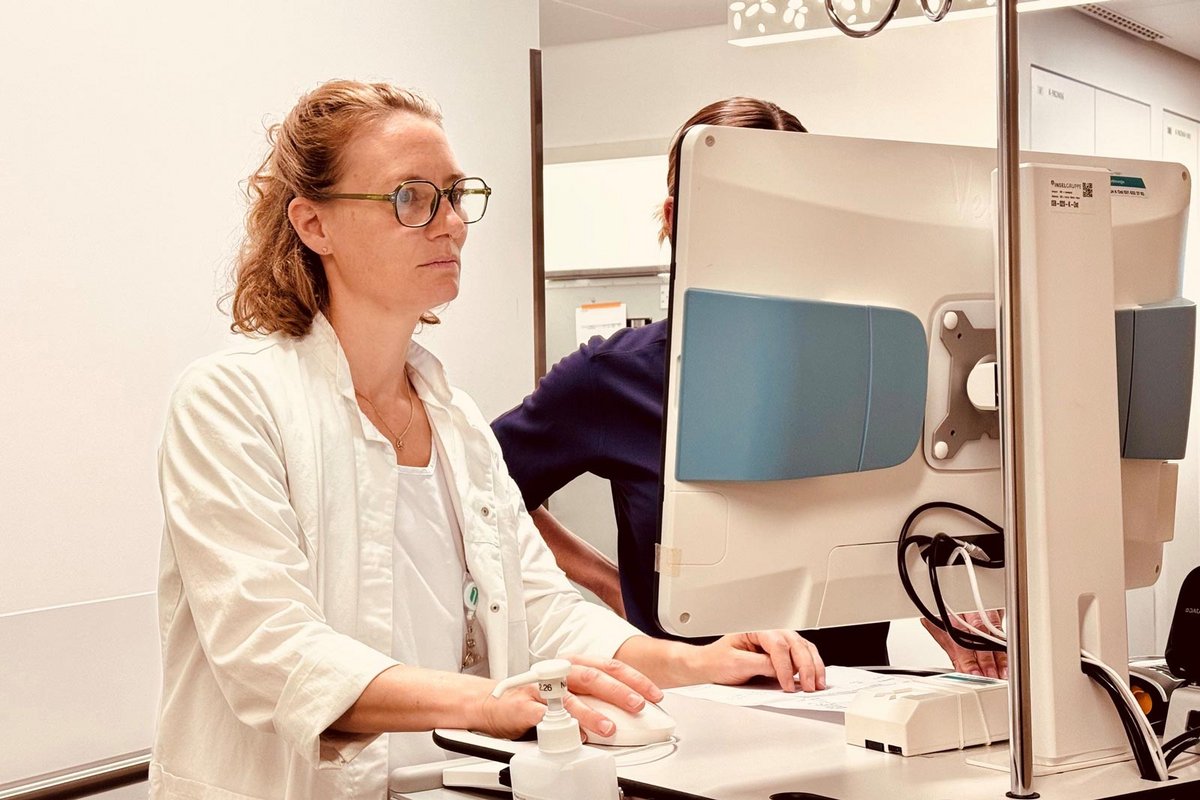
9 a.m. Helene Schenk, an Advanced Practice Nurse (APN) at Inselspital, has already finished the morning meeting with the medical spine team. Together, the team reviewed the current situation: How are the patients on the ward doing? How have their symptoms progressed? What tests are scheduled? And what is needed to ensure a safe return home or transfer to a rehabilitation facility?
Afterward, Helene Schenk makes her rounds. She examines patients, asks about their symptoms, and discusses the next steps with them. Together with the nursing and medical teams, she assesses whether medications need to be adjusted, additional specialists need to be consulted, or further measures need to be arranged. She is also available to listen to questions and concerns from family members.
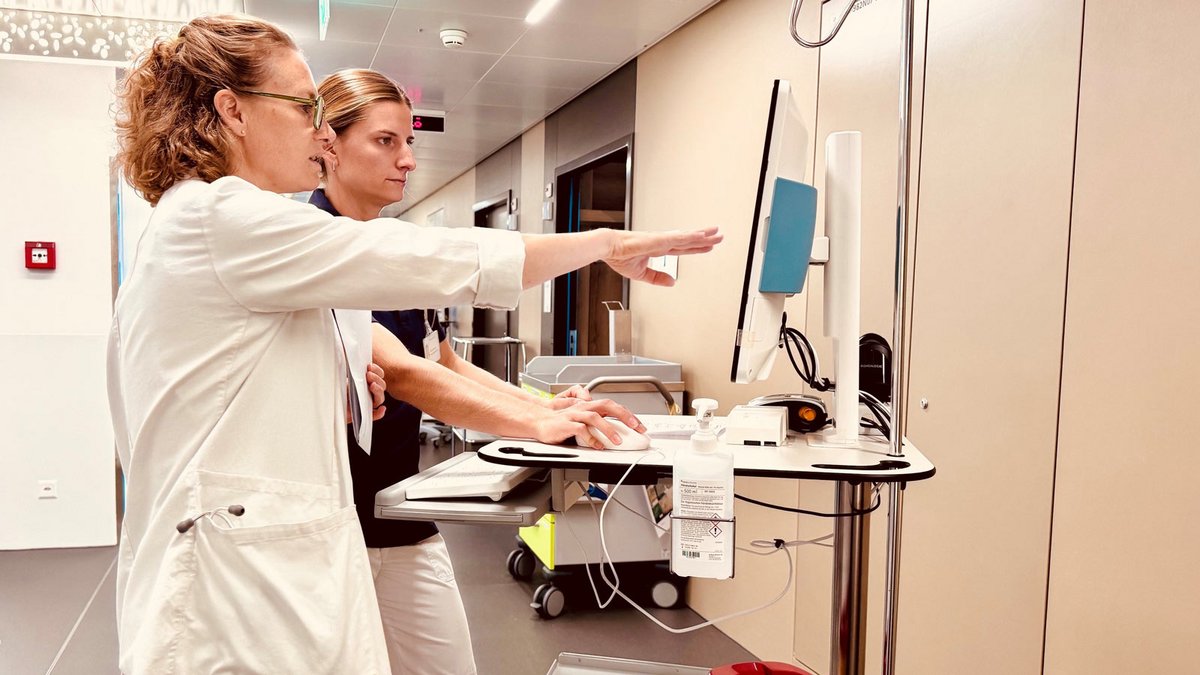
«We are the first point of contact for many issues,» says Helene Schenk. «At the same time, we serve as a link between patients, their families, the nursing staff, the doctors, and the therapy teams.»
Registered nurse with an expanded competency profile
APN stands for Advanced Practice Nurse. APN nursing experts have completed a nursing program at a university of applied sciences, have clinical work experience, and have earned a specialized master’s degree in nursing science (MSc). APNs combine a patient-centered approach with in-depth clinical expertise.
A distinctive feature of neurosurgery at Inselspital is the dual role of Advanced Practice Nurses (APNs). In what is known as a «blended role,» they combine two areas of responsibility: On the one hand, as nurse practitioners, they are directly involved in the clinical care of patients. At the same time, as Clinical Nurse Specialists (CNS), they take on responsibilities in quality improvement, optimize clinical processes, and provide expert support to nursing teams in complex situations.
«We work in both roles every day,» explains Helene Schenk. «It is precisely this combination of expanded clinical practice and professional development that makes the APN role in the neurosurgery department at Inselspital so special.»
However, APNs do not replace either nursing care or the medical profession. General nursing care remains the responsibility of registered nurses. Clinical decisions and prescriptions are made within clearly defined areas of authority and in consultation with the medical team.
Helene Schenk is part of the three-person APN team that cares for patients with spinal conditions. In her clinical practice, she cares for an average of ten to twelve people a day.
Support in a stressful situation
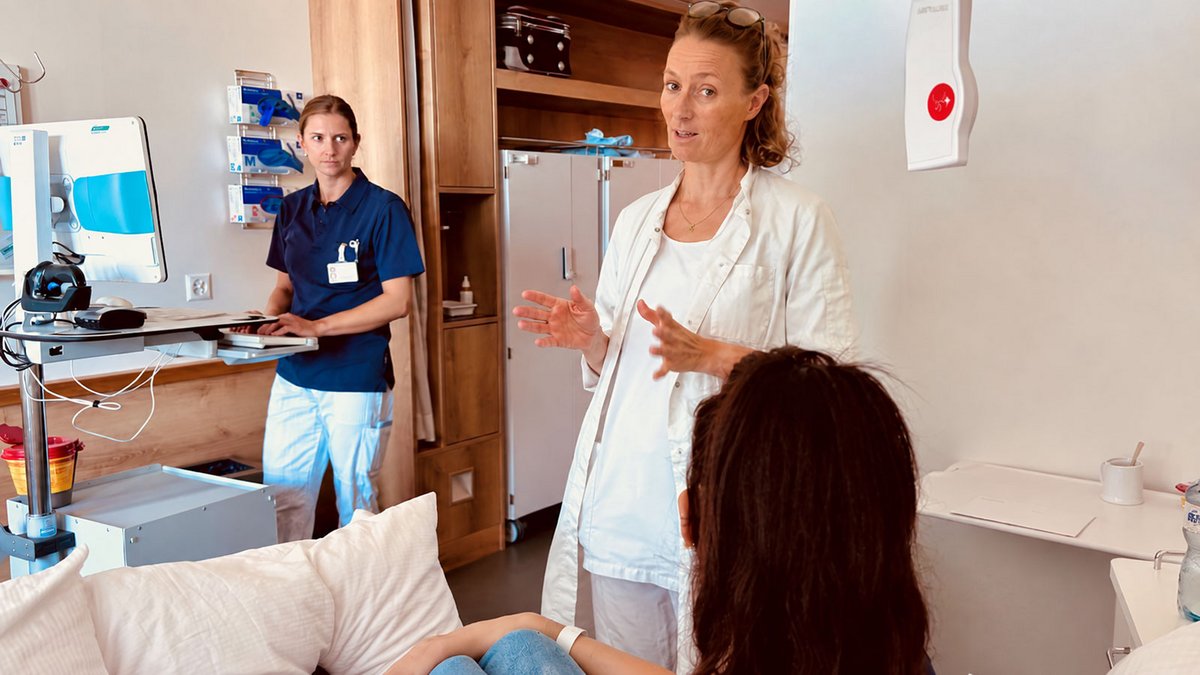
Care begins the moment patients are admitted to the ward. By this point, many patients have already endured a long history of suffering. Some have been living with pain and physical limitations for months or years. Others are worried about the possible consequences of the surgery.
«When it comes to procedures near the spinal cord, the fear of paralysis is a recurring concern,» says Helene Schenk. «People with a long history of illness also often wonder whether the surgery will actually make a difference.»
There are no simple answers to these questions. Spinal surgery does not automatically mean that all symptoms will disappear immediately. This makes it all the more important to work together to establish realistic expectations and set achievable goals.
«Patients should not have false hopes,» says Helene Schenk. «At the same time, however, they should not go into treatment with a negative attitude.»
Regaining trust in the body
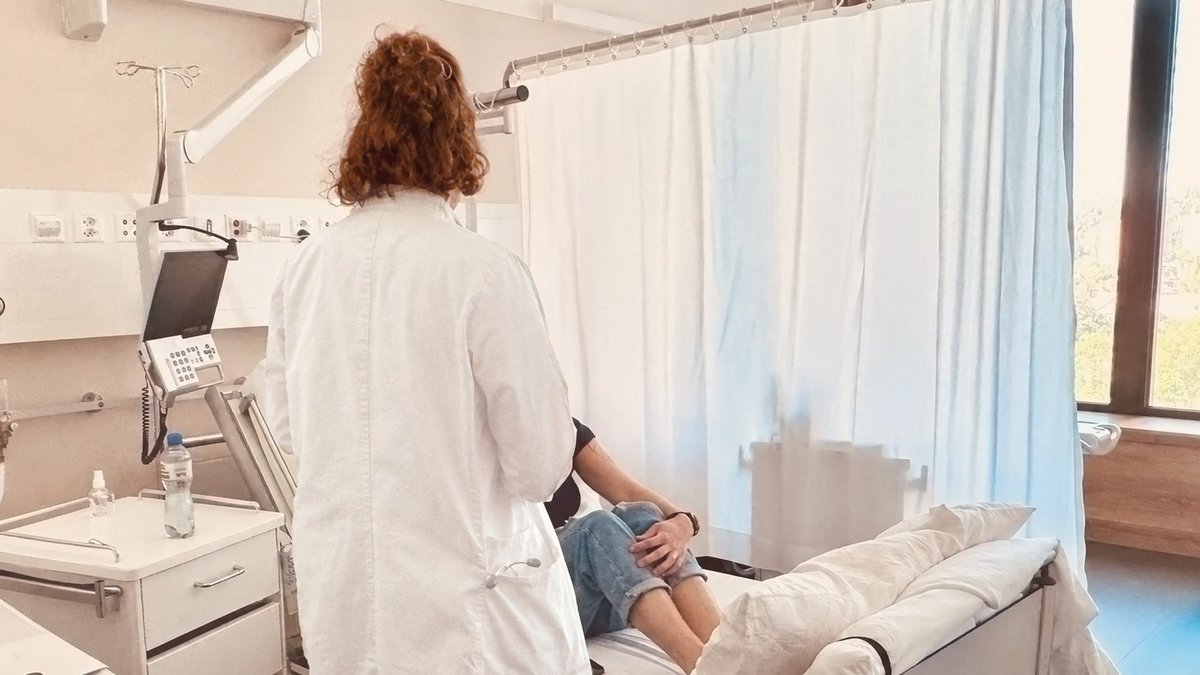
After spinal surgery, early mobilization tailored to the individual’s specific situation is important. Patients should get back on their feet as soon as possible and gradually resume their daily routines. However, Helene Schenk emphasizes that this requires patience.
Pain immediately after surgery is not uncommon. Appropriate pain management can help patients get back on their feet. Some patients are hesitant to take pain medication. In this interview, Helene Schenk explains why treating acute pain is important during the initial phase of recovery.
In addition to physical recovery, there are also some fundamental questions to consider: What can I safely ask of my back? What kinds of discomfort are normal? And how can I learn to trust my movements again?
«It is very important for patients to rebuild their trust in their bodies,» says Helene Schenk. «They need to be able to experience that their bodies are functioning properly again.»
To ensure a successful return home
Right from the start of the hospital stay, the APN works with patients to prepare for the period after discharge. In doing so, the APN takes into account the patient’s general condition, social environment, and situation after discharge: Is rehabilitation advisable? Can patients move around and care for themselves independently at home? Do they need support from Spitex? Do family members need additional information?
Rehabilitation is particularly indicated if there were already limitations in movement or body sensation prior to the procedure, or if patients have lost a significant amount of strength and endurance due to pain and prolonged inactivity.
A contact person on an equal footing
During their hospital stay, Helene Schenk supports patients during a particularly vulnerable phase. Her nursing background often makes it easier for patients to approach her: Many patients find it easier to ask her questions or voice concerns that they might hesitate to share with doctors. «We often have the opportunity to build a relationship of trust within a short period of time,» she says. She is able to resolve many issues directly, while others she refers specifically to the appropriate specialists.
She tries to approach even challenging encounters with openness. A dismissive attitude often stems from a difficult past. «Our patients find themselves in an exceptional situation—some have been in it for a very long time,» says Helene Schenk. «When a person has chronic pain that severely limits their quality of life, it’s very important to listen to them and take their situation seriously.»
It is precisely this combination of human connection and clinical expertise that Helene Schenk values most about her work. She supports patients and their families, conducts clinical examinations, collaborates with other professionals to develop treatment plans, and shares her knowledge.
«My workdays are long, but they go by very quickly because the work is so varied,» she says. «There is nothing I miss: I have everything I find exciting in one job.»
World Spine Day #worldspineday

Every year on October 16, World Spine Day (#worldspineday) is observed. It is considered the largest international initiative to raise awareness about the growing burden of spinal disorders. The day provides an important platform for informing people about prevention options and modern treatment methods, such as minimally invasive procedures. With timely treatment, the quality of life for many people affected can be significantly improved.
Related News
- World Spine Day – Caution: cervical spinal stenosis16.10.24 - On World Spine Day (#worldspineday) on October 16, we draw attention to an often-unrecognized condition: cervical spinal stenosis.
- #EVERYSPINECOUNTS16.10.22 - This is the motto of World Spine Day, which will be celebrated with numerous events on October 16. Our contribution: the film “Disc surgery – and…